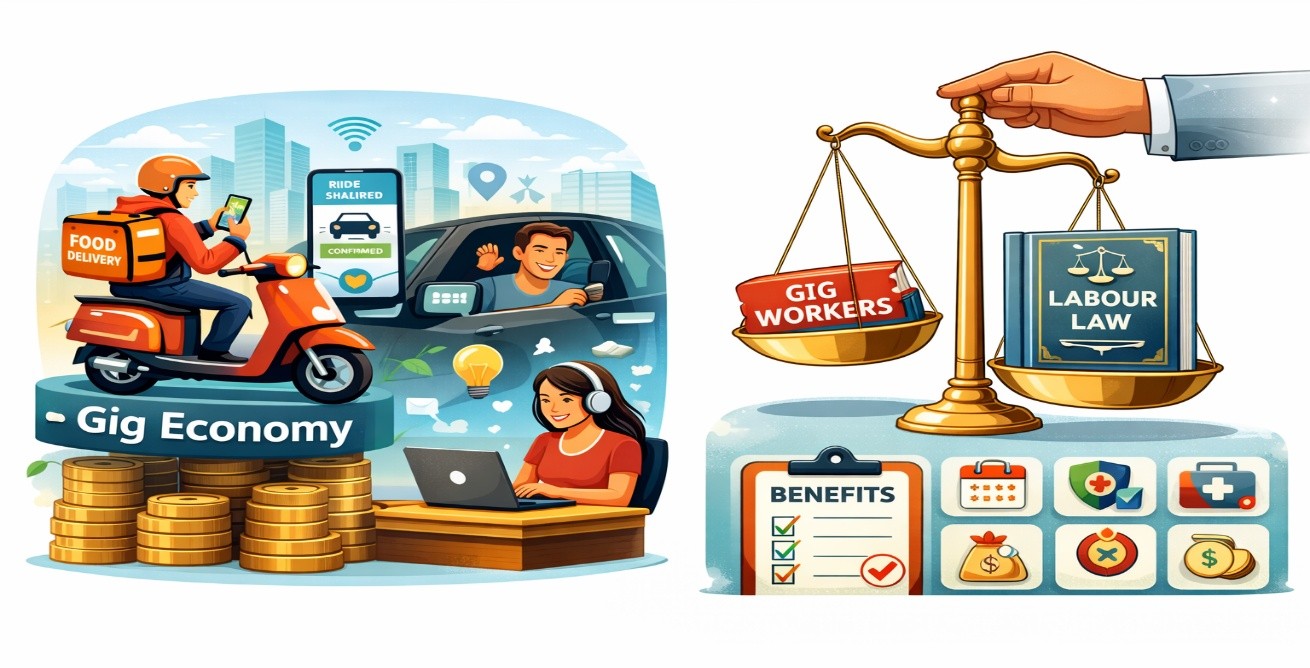
The Gig Economy Is Growing Fast… But Are Workers Protected?
The Rise of the Gig Economy
The gig economy refers to a work system where individuals perform short-term, flexible jobs instead of permanent employment. These workers are usually paid per task, project, or service.
Some common examples of gig workers include:
- Food delivery partners
- Ride-sharing drivers
- Freelance writers and designers
- Online tutors and consultants
Most gig workers connect with customers through digital platforms or mobile apps, which makes the entire process quick and convenient.
Why the Gig Economy Is Growing
The gig economy has expanded rapidly in recent years because of several reasons:
- Technology and mobile apps make it easier for workers and customers to connect.
- Many people prefer flexible working hours.
- Companies can hire workers when needed, reducing fixed employment costs.
Because of these benefits, experts believe that gig work will continue to grow significantly in the coming years.
Gig Workers vs Traditional Employees
One of the biggest debates around the gig economy is whether gig workers should receive the same protection as regular employees.
The table below highlights the key differences.
| Aspect | Traditional Employees | Gig Workers |
|---|---|---|
| Employment Type | Permanent or long-term job | Short-term or task-based work |
| Payment | Fixed monthly salary | Payment per task or service |
| Job Security | High | Low |
| Benefits | PF, paid leave, insurance | Usually not provided |
| Work Flexibility | Limited | High |
This difference in benefits and protection is one of the main reasons why labour law experts are discussing reforms.
The Challenge: Lack of Legal Protection
Most gig workers are classified as independent contractors rather than employees. Because of this, many labour laws do not apply to them.
As a result, gig workers often do not receive:
- Minimum wage protection
- Paid leave
- Health insurance
- Social security benefits
- Job security
This situation can make gig workers financially vulnerable, especially during emergencies or health issues.
Labour Laws and Gig Workers in India
Recognizing the growing number of gig workers, the Indian government introduced an important reform through the Code on Social Security, 2020.
This law officially recognizes gig workers and platform workers, which was a significant step toward their inclusion in labour protection systems.
Some of the benefits proposed under this law include:
- Health and accident insurance
- Pension schemes
- Social security funds
- Welfare programs for gig workers
Although the implementation is still developing, this move shows that labour laws are slowly adapting to new work models.
The Role of HR and Organizations
Human Resource professionals and organizations also have an important role in improving the conditions of gig workers.
Companies can support gig workers by:
- Ensuring fair and transparent payment systems
- Providing basic insurance and safety measures
- Offering skill development and training programs
- Creating clear policies for work allocation and performance ratings
Such practices can help build a more ethical and sustainable gig economy.
Conclusion
The gig economy is becoming an important part of the modern workforce. Millions of workers depend on platform-based jobs for their livelihood. However, flexibility should not come at the cost of worker protection.
Including gig workers in labour laws is a crucial step toward ensuring fairness, security, and dignity for all workers in the future of work.